

The Common App is not just a form you complete before the deadline. It is the main document through which many U.S. universities first understand your academic level, personality, priorities, and potential contribution to campus. Admissions officers often review applications quickly, so every section needs to be clear, specific, and easy to absorb.
Before you start writing, know what the application usually includes:
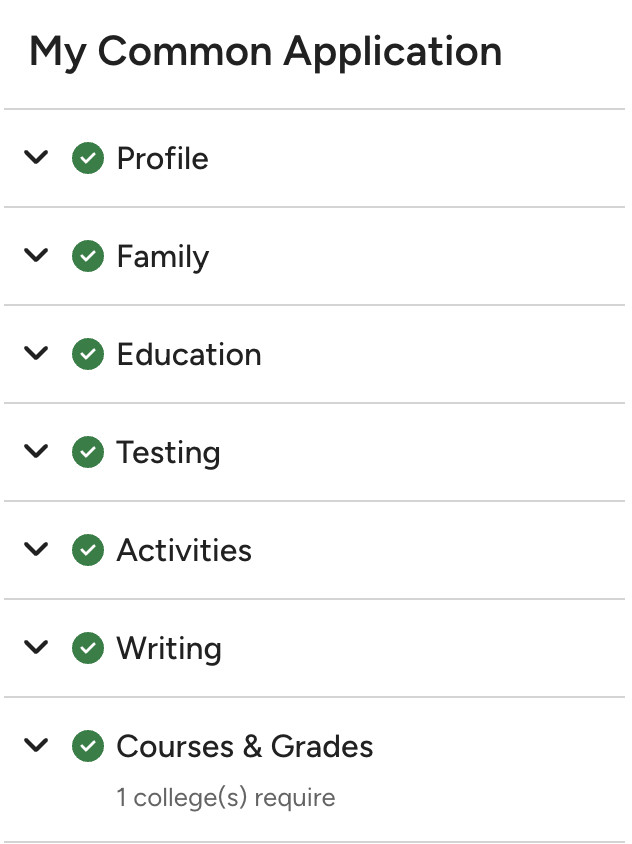
- Personal information
- School rank and GPA
- Courses you have taken: AP, IB, A-levels, honors classes, national curriculum subjects, online courses, etc.
- Academic honors and awards: up to 5
- Testing: IELTS, TOEFL, SAT, ACT, Duolingo English Test, etc.
- Predicted grades
- Extracurricular activities: up to 10
- Personal essay
- Challenges and circumstances
- Additional information
- Education progression
- Supplemental essays, if required
Ask yourself before opening the application: “If an admissions officer had only a few minutes to understand me, what would I want them to remember?” That answer should guide the way you fill in every section.
GPA and school context

The first section to check carefully is your academic record. Universities care about grades, but they also understand that schools use different grading systems. Ask your school whether it reports GPA, class rank, or predicted grades. If your school does not calculate GPA or rank, that is fine. It will not automatically work against you.
What matters is accuracy. Do not try to convert your grades unless the application specifically asks you to.
Courses section
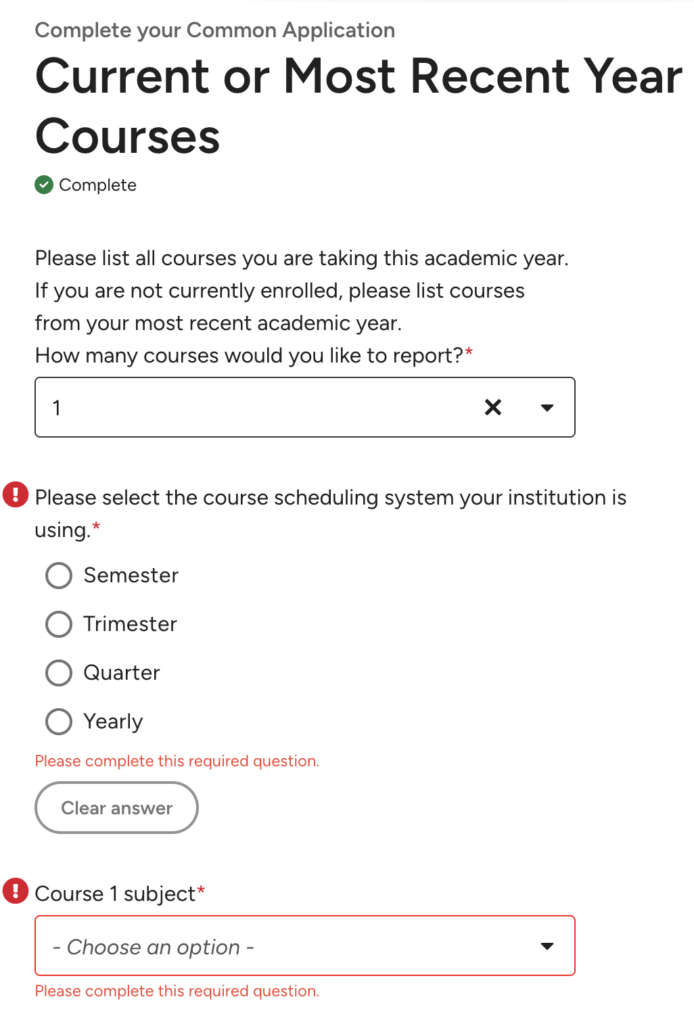
For the courses section, be honest and detailed. Admissions officers use this section to understand the level of academic challenge you chose, not only the final grades you received. A student taking the most rigorous courses available at their school may be evaluated differently from a student who avoided challenging subjects.
Include advanced courses such as AP, IB Higher Level, A-levels, honors classes, dual-enrollment courses, or demanding national curriculum subjects. If you took online courses, summer programs, or university-level classes that are relevant to your academic interests, you can mention them where appropriate, especially if they explain your intellectual direction.
Do not exaggerate course titles. If the official course name is simple, keep it simple. If the course had a stronger level than the name suggests, clarify it in the Additional Information section rather than forcing extra words into the course title.
Honors and awards section

In the honors section, you can add up to five academic achievements. Try to use all five spaces if you have enough meaningful awards, even if some are smaller than others. A minor but real achievement is usually better than leaving a section empty.
The key is not just naming the award. You need to show its scale, selectivity, and prestige. Each entry has very limited space, so be specific.
Bad example:
Harvard essay winner
Why this is weak:
The name alone is too vague. Admissions officers may not know the competition, how selective it was, whether it was local or international, or what “winner” actually means. Even if the word “Harvard” sounds impressive, the title alone does not prove rigor.
Stronger example:
Harvard essay contest; 2nd/10,000 applicants; 3 rounds; $2,000 prize
This version gives context. It shows selectivity, ranking, structure, and recognition.
Interactive question: If someone has never heard of this award, would they still understand why it matters?
Testing section
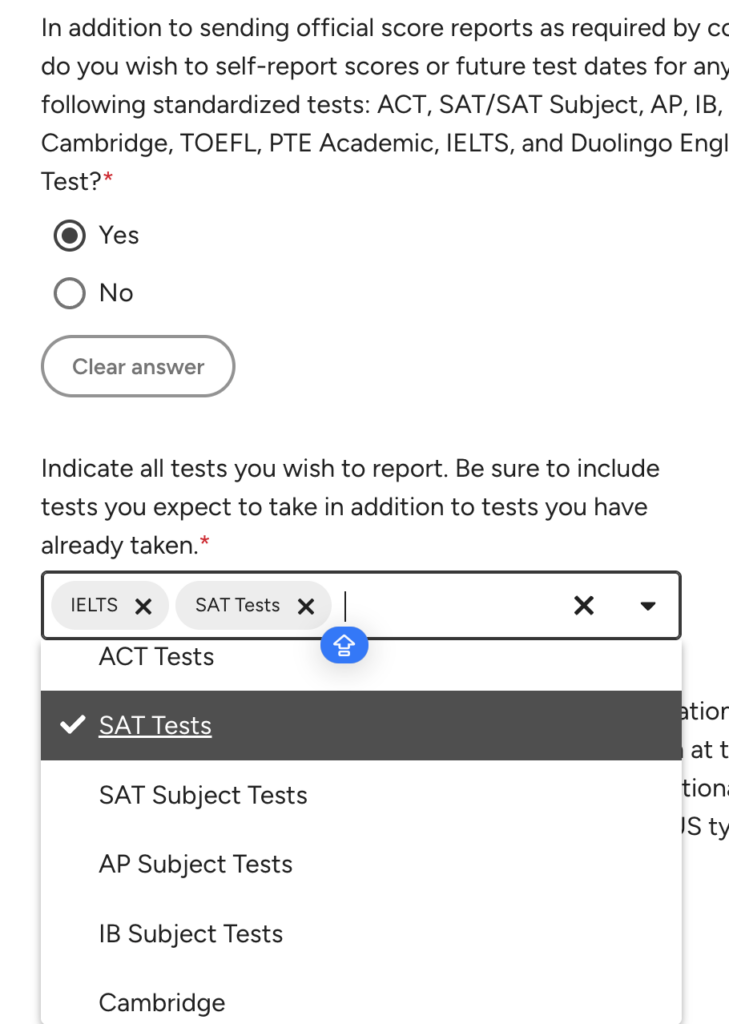
If English is not your first language, include English-language proficiency tests such as IELTS, TOEFL, or Duolingo English Test when the college requires or accepts them. Also include SAT or ACT scores if they strengthen your application and match the college’s testing policy.
Do not assume that every college has the same rule. Some schools are test-optional, some require scores, and some have different expectations for international applicants. Always check each college’s requirements before submitting.
Do not be afraid of superscoring if a college accepts it. Admissions officers are used to seeing applicants report their strongest section scores across different test dates. AcademX generally advises students to send SAT scores above 1450+, even when the college’s median score looks lower, because a strong score can still support the academic side of the application.
For IELTS and TOEFL, avoid treating one score as a universal minimum. Aiming for IELTS 7.0+ or TOEFL 100+ is often a strong target, but some selective colleges or programs may expect higher results. Always confirm the exact requirement on the university website.
Predicted grades
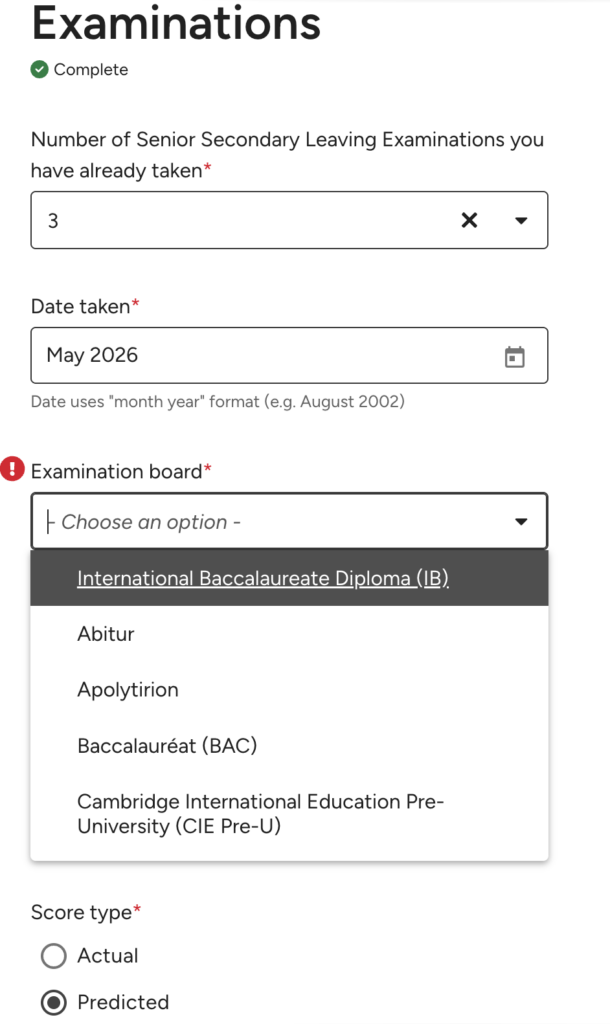
In many education systems, teachers or counselors submit predicted grades. These predictions can strongly influence how universities evaluate your academic potential, especially if final exams happen after application deadlines.
Predicted grades often depend on your teacher’s judgment, classroom performance, and consistency. If you need strong predicted grades, do not wait until the last moment. Be active in class, submit work on time, and speak respectfully with your teacher about your goals. Explain why these predictions matter for your university applications, but do not pressure them to change their decision.
Extracurricular activities section
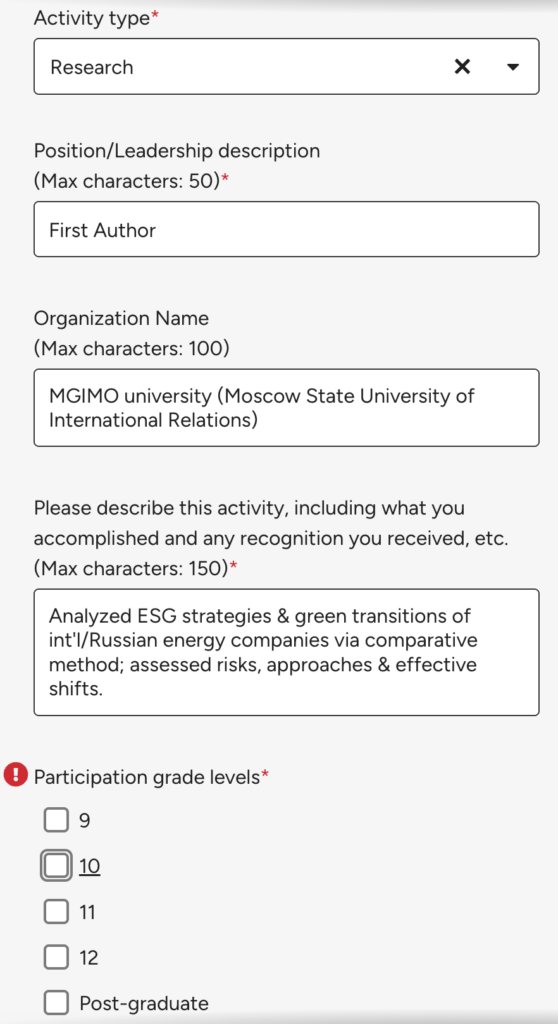
Try to fill in all 10 activities if you have meaningful experiences. These can include clubs, competitions, research, work, volunteering, family responsibilities, hobbies, independent projects, and community involvement.
For the position or leadership description, you have very little space, so use it strategically. Add information that gives you credit and would not fit in the description.
Bad example:
Math club leader
Better example:
Co-Founder, Leader, Contributor – Math club
This sounds more specific and shows responsibility.
For the organization name, avoid unexplained abbreviations. Write “Moscow State University” instead of “MSU” if the full name gives more context. Admissions officers may not know local abbreviations, but they can understand a recognizable institution when you spell it out.
For the activity description, you have very limited space, so every word should do something. Include action, scale, impact, and uniqueness. If the activity is rare or unusually demanding, show that.
Example: Math club
Weak description:
Hosted math sessions and helped students improve their grades.
Why it is weak:
It sounds generic, passive, and more like informal peer support than a structured club. It does not show creativity, consistency, or impact.
Stronger description:
Conducted Math sessions; created gamified quizzes; mini logical-reasoning polls & puzzles; animated slides for 10 students weekly (all modules).
This version shows initiative, structure, creativity, and consistency.
Top tip: Shorten words where appropriate. Use “&” instead of “and,” “w/” instead of “with,” and “collab” instead of “collaboration.” This is acceptable in short activity descriptions, as long as the meaning remains clear and professional. The same strategy can work in the honors section.
Challenges and circumstances
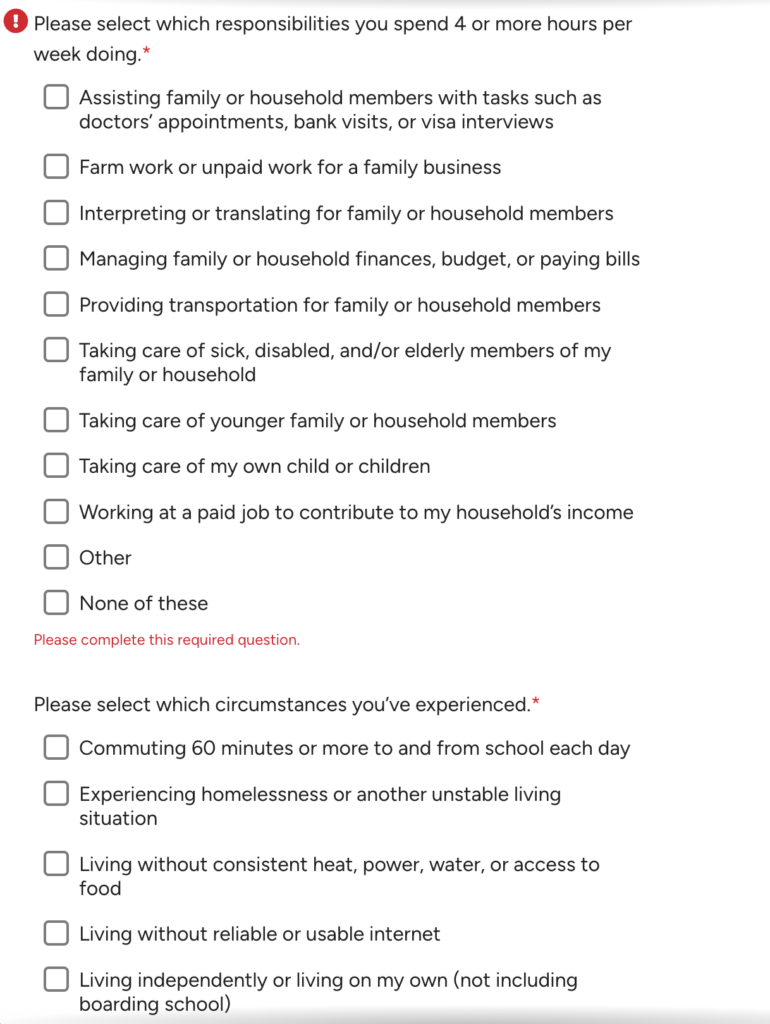
Use this section carefully. It can help you explain circumstances that affected your academic performance, extracurricular involvement, attendance, or access to opportunities. This could include health issues, family responsibilities, school changes, financial limitations, conflict, bullying, instability, or limited resources at your school.
Do not exaggerate. The goal is not to make admissions officers feel sorry for you. The goal is to give them context so they do not misunderstand your application.
Personal essay section
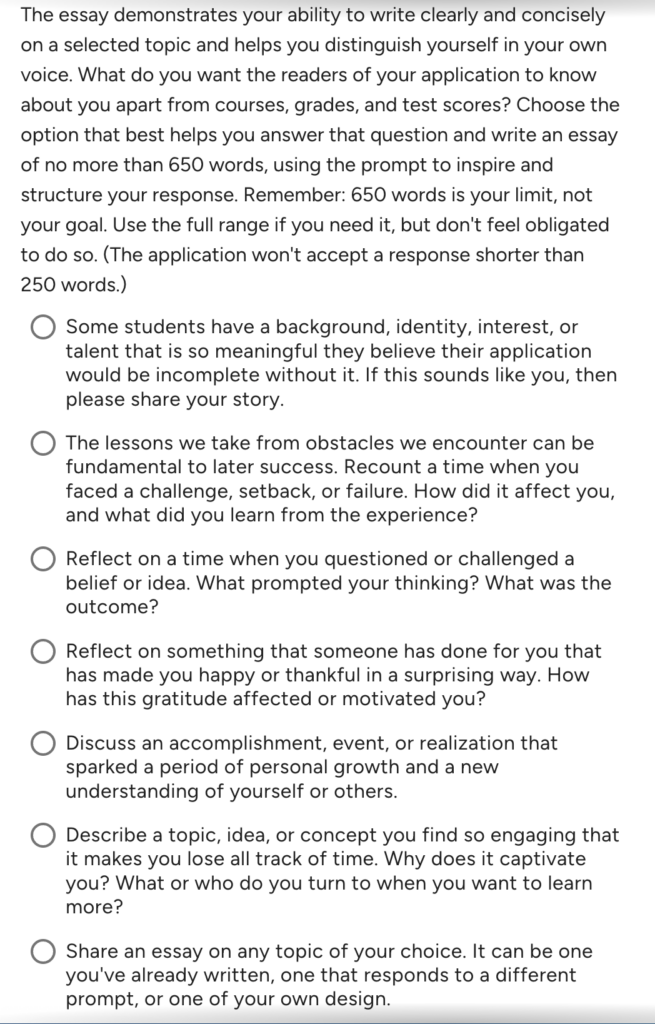
The personal essay is a separate and much longer topic, so this blog focuses only on how to handle it within the Common App process. A full guide to writing the essay should be covered in a separate blog.
For now, remember this: choose a topic that reveals something meaningful about how you think, what you value, and how you respond to experiences. Do not choose a topic only because it sounds impressive. A simple story with strong reflection is usually better than a dramatic story with no insight.
Students sometimes worry that the spacing between paragraphs looks too small in the Common App text box. Do not create large artificial gaps. The final application format usually adjusts spacing automatically, so keep your formatting clean and simple.
Additional information sections
Part 1 (Challenges and circumstances)
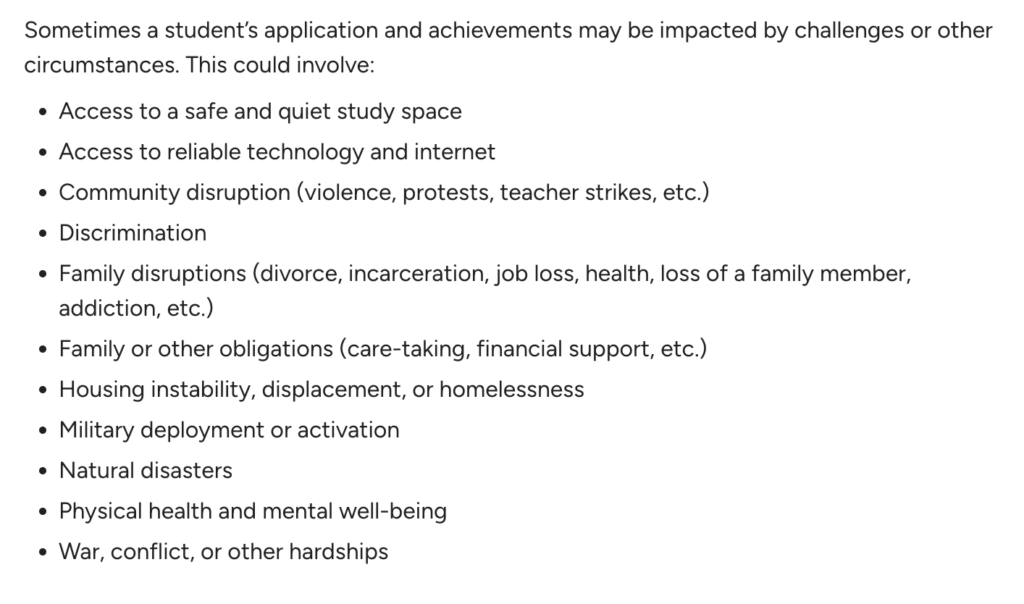
This section is new, and is quite similar to the previous circumstances section. If you had any of the above experiences, mention them, but again, do not exaggerate.
E.g. explain a temporary drop in grades, illness, family issue, school change, or other disruption
Provide context about limited opportunities at your school or in your city
Part 2 (additional information)
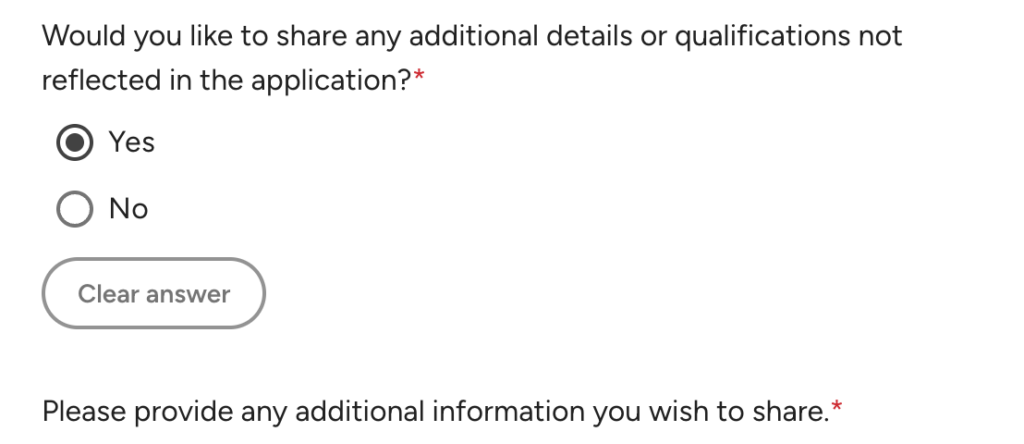
This section is extremely important, but many students either ignore it or misuse it. It gives you a chance to explain information that does not fit naturally elsewhere.
You can use Additional Information to:
- Explain a complex passion project, research project, or independent initiative
- Add links to a portfolio, website, published work, YouTube channel, article, or project page
- Clarify an activity or award that admissions officers may not understand
- Mention serious academic work outside school, such as online courses, independent reading, or university-level study
- Or, your school offered no AP, IB, or A-level options, this section can help explain why your course list looks different from another applicant’s. If your activity was unusual, such as building an app, running a local tutoring project, or conducting independent research, you can briefly explain the scale and result.
However, do not treat this section as a second personal essay. Keep it direct, factual, and useful.
Education progression

This section is used to explain changes in your education path. If you changed schools, skipped a year, repeated a year, moved countries, switched curricula, or had a gap in your studies, explain it clearly and honestly.
Be genuine, but stay concise. You do not need to over-explain every detail. If the school did not match your academic goals, say so. If you changed schools because of bullying, family circumstances, relocation, or curriculum limitations, explain the situation respectfully and directly.
Supplemental essays
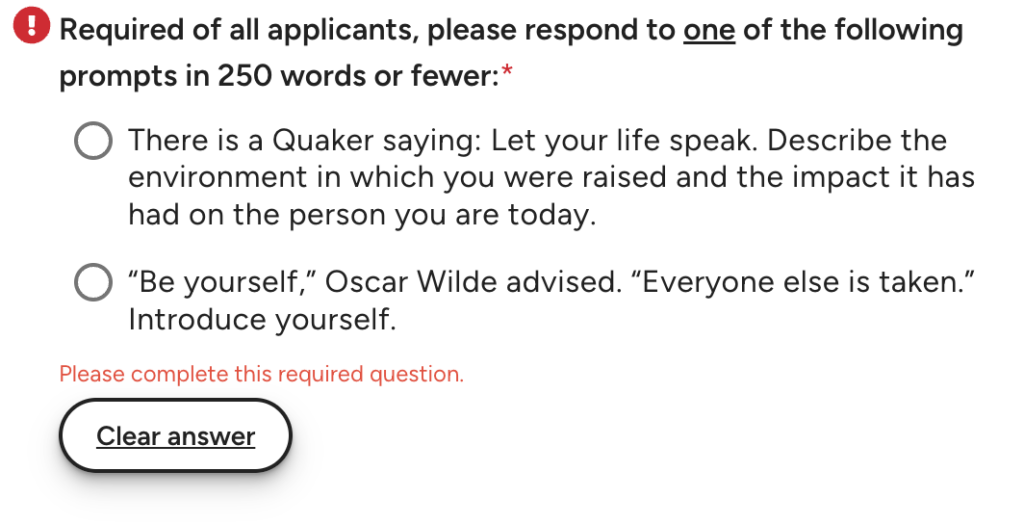
Some colleges include supplemental essays directly in the Common App, while others place them on a separate applicant portal after you submit the main application. Do not assume that the Common App checklist shows everything you need to complete.
After submitting, check your email and each college’s applicant portal regularly. Some supplemental materials, scholarship essays, portfolios, or forms may appear only after the main application is submitted. Missing these can hurt your application even if your Common App itself was completed on time.
Final advice
The Common App rewards clarity. You do not need to sound dramatic, perfect, or overly polished. You need to sound accurate, specific, and thoughtful. Every section should help admissions officers understand one of three things: what you achieved, what context shaped your path, or what kind of student you will be on campus.
Before submitting, read your application as if you were seeing yourself for the first time. If something is unclear, add context. If something sounds vague, make it specific. If something repeats information, cut it. The strongest applications are not always the longest ones; they are the ones where every section has a purpose.
Want a mentor to check your Common App before you submit it – sections, activities, and essays included?
